
Skip to content
Optimize HealthChiropractic Center
Call

Spine Education

Patient Spine Guide

Learn
About
The Spine

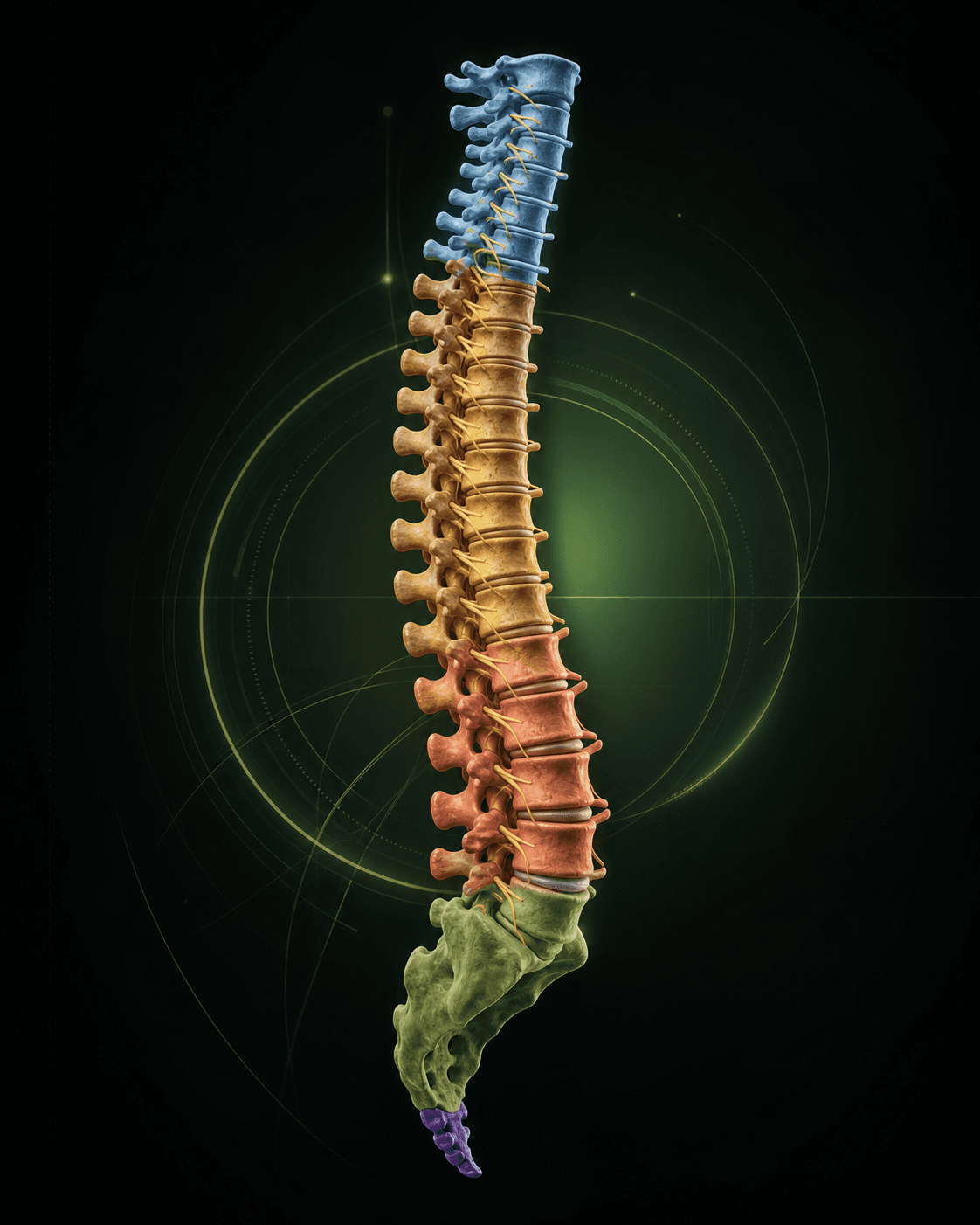
The spine is divided into five main sections that affect movement, posture, nerve communication, and whole-body health.

Identify

5 spinal sections

Connect

Nerves and motion

Learn

Role of each region

Support

Better spinal health

Realistic 3D graphic of the human spine showing cervical, thoracic, lumbar, sacrum, and coccyx regions
CervicalC1-C7
T1-T12Thoracic
LumbarL1-L5
S1-S5Sacrum
CoccyxCO

Spine Region
Map

Click each spinal section below to learn the role it plays in your overall health.

5 Areas
C1-C7

Cervical

Neck motion, headaches, shoulder tension

T1-T12

Thoracic

Rib motion, posture, breathing mechanics

L1-L5

Lumbar

Low back support, hips, leg referral patterns

S1-S5

Sacrum

Pelvic balance and lower body load

CO

Coccyx

Base support and seated comfort

Clinical Context

Misalignment can create symptoms away from the spine, so education starts with the full structure.

The five regions of your spine

Each section of the spine has a different job, a different range of motion, and a different set of nerves running out of it. Knowing which region a symptom belongs to is usually the first step in understanding why it is happening.

Cervical C1-C7

The cervical spine is the seven vertebrae of the neck, running from the base of the skull to the top of the shoulders. It is the most mobile part of the spine — it carries the weight of the head while allowing you to nod, rotate and tilt. Nerves exiting this region travel into the head, shoulders and arms, which is why neck problems are often felt somewhere else entirely.

Related: Neck Pain, Headaches & Migraines, Arm Pain

Thoracic T1-T12

The thoracic spine is the twelve vertebrae of the mid back, each connected to a pair of ribs. That rib attachment makes it the least mobile region of the spine and the most structural — it protects the heart and lungs and anchors your posture. Because it moves less, stiffness here often shows up as restricted breathing or as strain passed along to the neck and low back.

Related: Tech Neck & Posture, Shoulder Pain

Lumbar L1-L5

The lumbar spine is the five largest vertebrae in the body, carrying most of your weight and absorbing the load from lifting, bending and twisting. The discs here are the thickest in the spine, and the nerve roots leaving this region form the sciatic nerve — which is why a lumbar problem is frequently felt down the buttock and leg rather than in the back itself.

Related: Back Pain, Sciatica, Disc Injury

Sacrum S1-S5

The sacrum is a triangular bone formed from five vertebrae that fuse during adolescence. It wedges between the two halves of the pelvis at the sacroiliac joints and transfers the load of the upper body into the hips and legs. Because it is the junction between spine and pelvis, imbalance here can change how you stand and walk.

Related: Hip Pain, Leg Pain

Coccyx CO

The coccyx, or tailbone, is the small set of three to five fused segments at the very base of the spine. It is not weight-bearing when you stand, but it forms part of the tripod you rest on when seated and provides an attachment point for pelvic floor muscles and ligaments.

This page describes spinal anatomy for general education. It is not a diagnosis. If you have symptoms you are concerned about, see one of our doctors or your physician.

⚠ Interactive layer failed to load — check browser extensions / console